6 Best AI Review Response Software Platforms for Multi-Location Brands
Compare 6 AI review response platforms for multi-location brands: Synup, Birdeye, Yext, Uberall, SOCi, and Reputation, with pricing and workflows.
Nancy Shrivastav
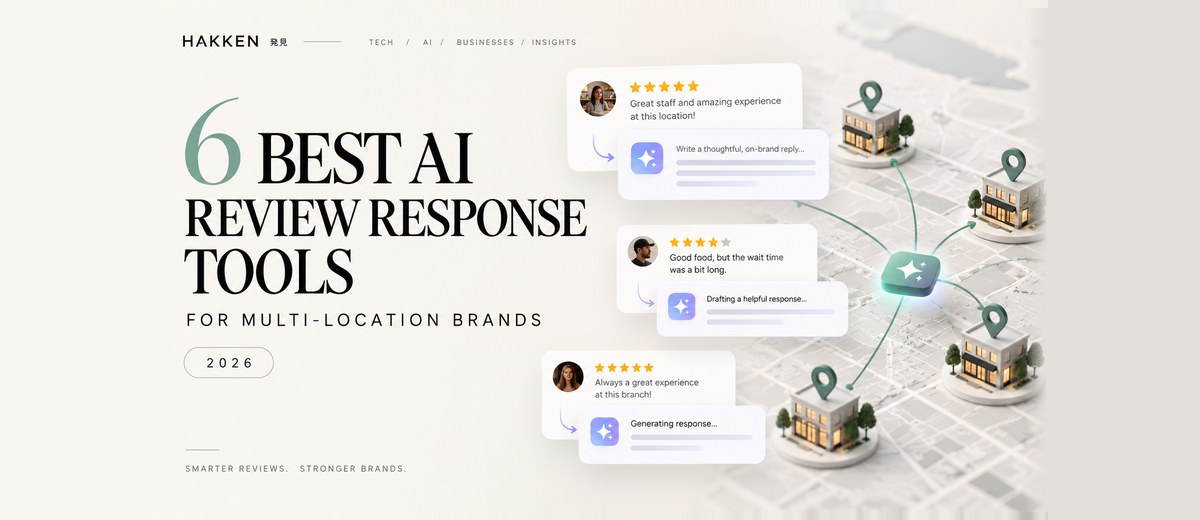
Six AI review response software platforms worth considering for multi-location brands are Synup, Birdeye, Yext, Uberall, SOCi, and Reputation. These tools help businesses generate review replies, manage customer feedback across locations, and coordinate responses through centralized workflows.
The main difference is how much control each platform provides over the response process. Some tools generate drafts for employees to approve, while others support automated publishing based on configurable rules.
For retail chains, healthcare networks, restaurants, and franchise businesses, the most important considerations are response quality, brand consistency, location-level permissions, review platform coverage, escalation procedures, and pricing.
This guide compares six platforms using documented capabilities, explains their limitations, and provides practical guidance for implementing AI review responses without sacrificing accurate, professional customer communication.
Best AI Review Response Software Compared
- Synup: Best suited for: Integrated reputation and local marketing workflows. Main differentiator: AI drafts, templates, bulk replies, and centralized location management.
- Birdeye: Best suited for: Businesses handling high review volumes. Main differentiator: Configurable AI response agents, review analysis, and approval workflows.
- Yext: Best suited for: Enterprises needing structured response governance. Main differentiator: Generative response rules with optional human approval.
- Uberall: Best suited for: Large retail and franchise networks. Main differentiator: AI-assisted bulk replies, brand guidelines, and location-level collaboration.
- SOCi: Best suited for: Distributed franchise marketing teams. Main differentiator: Brand-trained AI responses and enterprise reputation automation.
- Reputation: Best suited for: Customer experience-focused organizations. Main differentiator: AI-assisted replies connected to reputation analytics and feedback intelligence.
The best choice depends on the work your team needs to perform.
Synup is relevant when review management forms part of a broader local marketing operation. Birdeye and Yext deserve attention when configurable response workflows are important. Uberall and SOCi are worth evaluating for distributed location networks, while Reputation is particularly relevant when customer feedback supports operational decisions.
These recommendations are based on documented product capabilities, not independent performance testing.
What Is AI Review Response Software?
AI review response software helps businesses draft, manage, and sometimes publish replies to customer reviews using artificial intelligence.
Instead of writing every reply manually, employees can use AI-generated suggestions based on the review's rating, written feedback, and available business context.
For example, a customer may leave a five-star review praising an employee's helpfulness. An AI response tool can prepare a short acknowledgment referring to that experience.
A negative review describing a billing dispute requires more care. The software can help draft a response, but it should not invent details about the transaction or promise a resolution that has not been authorized.
AI-Generated Replies vs. Automated Review Responses
These terms describe different levels of automation.
- Manual response: How it works: An employee writes and publishes the reply. Human involvement: Full.
- Template-based response: How it works: An employee selects and edits approved wording. Human involvement: Selects or edits.
- AI-assisted response: How it works: AI generates a draft based on review information. Human involvement: Reviews and publishes.
- Approval-based automation: How it works: AI drafts and routes the response to an approver. Human involvement: Approves or rejects.
- Automatic publishing: How it works: Software publishes responses under configured rules. Human involvement: Monitors exceptions.
A platform offering AI-generated replies does not necessarily provide unattended automatic publishing.
Likewise, a platform capable of automatic responses may not support that feature for every review source, country, or subscription.
According to Google's official review management guidance, businesses must have verified profiles to reply to Google reviews. Google also reviews business replies against its content policies before displaying them publicly.
For large organizations, the safest starting point is generally to use AI for drafting while maintaining human approval for sensitive or complicated feedback.
How We Evaluated These AI Review Response Tools
This comparison focuses on businesses managing customer reviews across multiple physical locations.
The platforms were assessed using seven criteria:
- AI response generation: Ability to produce relevant replies that reflect customer feedback and brand instructions.
- Automation controls: Support for manual drafting, approval workflows, rule-based responses, and automatic publishing.
- Multi-location management: Centralized oversight, location assignments, and regional permissions.
- Review platform coverage: Supported sources for review monitoring and direct reply publishing.
- Escalation workflows: Handling of negative, sensitive, or complex feedback.
- Reporting: Visibility into response activity, customer sentiment, and location-level performance.
- Pricing: Published subscriptions, enterprise quotation requirements, and usage limitations.
The assessment uses publicly available vendor documentation reviewed in October 2026.
It does not represent independent hands-on testing. Vendor statements about response quality, time savings, or improved customer outcomes should be evaluated during a controlled trial.
The platform order reflects editorial use-case suitability rather than a measured ranking.
AI Review Response Software: Features and Pricing
- Synup: AI-generated replies: Yes. Response automation: AI drafts, templates, and bulk reply workflows; confirm additional automation options. Multi-location support: Yes. Pricing approach: Published plans; enterprise custom.
- Birdeye: AI-generated replies: Yes. Response automation: AI suggestions, approval workflows, and autonomous response agents. Multi-location support: Yes. Pricing approach: Custom quotation.
- Yext: AI-generated replies: Yes. Response automation: Configurable rules with human approval or automatic publishing. Multi-location support: Yes. Pricing approach: Enterprise quotation.
- Uberall: AI-generated replies: Yes. Response automation: AI-assisted bulk replies and approval workflows. Multi-location support: Yes. Pricing approach: Custom quotation.
- SOCi: AI-generated replies: Yes. Response automation: Brand-trained AI and automated reputation workflows. Multi-location support: Yes. Pricing approach: Custom quotation.
- Reputation: AI-generated replies: Yes. Response automation: AI-assisted responses; confirm publishing and approval configuration. Multi-location support: Yes. Pricing approach: Published per-location plans.
Feature availability depends on the selected product, configuration, location, and connected review sources.
The ability to monitor reviews from a website does not necessarily mean the platform can publish replies directly to that website.
6 Best AI Review Response Software Platforms for Multi-Location Brands
1. Synup: Best for Integrated Review and Local Marketing Workflows
Best suited for: Multi-location businesses and agencies that want review management connected to business listings, local SEO, and social marketing.
Synup provides reputation management tools alongside business listings management, local SEO tracking, social publishing, and AI-assisted marketing capabilities.
Its review tools help businesses monitor customer feedback across locations, prepare responses, and manage review activity through a centralized dashboard.
For example, a service franchise operating 80 locations may want headquarters to monitor unanswered reviews while individual managers handle customer feedback from their branches.
Synup can be evaluated for organizing these workflows alongside other location marketing activities.
The platform also offers Sydekick, an AI agent that assists with selected marketing tasks.
Key Capabilities
AI-generated review replies
Synup supports AI-generated response drafts.
According to its review response documentation, users generate an AI response, review the text, and select Send to publish it.
This distinction matters because the documented AI drafting workflow does not automatically publish every generated response.
Review response templates
Businesses can create reusable templates for common review situations.
Synup supports user-specific and global templates, as well as placeholders for inserting relevant location information.
Templates can help teams maintain consistent wording while allowing employees to personalize individual replies.
Bulk review responses
Synup documents a bulk response workflow for connected Google and Facebook reviews.
Users can select eligible reviews, prepare a response, and schedule a bulk response job.
However, Synup notes that this feature is not available to every user. It also documents source and account connection requirements.
Multi-location reporting
Marketing teams can monitor review activity, response status, and location-level feedback through the platform's reporting functions.
Broader local marketing tools
Synup also combines reviews with business listings, local visibility monitoring, and social publishing.
This may appeal to organizations trying to reduce the number of separate applications used for local marketing.
Strengths
Synup is particularly relevant when review response management is one part of a broader multi-location marketing program.
A franchise group may want to monitor reviews while maintaining accurate Google Business Profile information and coordinating local content.
Its combination of functions can support centralized oversight without requiring every marketing task to be managed separately.
Limitations
Synup's AI-generated review response workflow requires a user to publish the draft.
Its bulk response functionality is subject to account availability and documented source restrictions.
Businesses should verify any additional event-based or unattended automation capabilities during a demonstration rather than assuming these are included.
The platform also uses credits for certain AI agent activities, making expected usage an important purchasing consideration.
Pricing
Synup publishes the following monthly subscription plans:
- Solo: Included locations: 1. Monthly price: $49.
- Premium: Included locations: Up to 10. Monthly price: $299.
- Pro: Included locations: Up to 25. Monthly price: $499.
- Scale: Included locations: Up to 50. Monthly price: $899.
- Enterprise: Included locations: More than 50. Monthly price: Custom.
Plans differ in location capacity, monthly credits, and agent throughput.
Annual billing discounts are available.
Verdict: Synup is worth evaluating when AI-assisted review responses need to operate alongside listings management, local SEO, and other multi-location marketing workflows.
2. Birdeye: Best for High-Volume Review Management
Best suited for: Healthcare groups, hospitality businesses, service franchises, and enterprises handling substantial customer feedback.
Birdeye provides customer experience and reputation management software with AI-assisted review response capabilities.
Its Review Response Agent supports multiple approaches to handling incoming customer feedback.
For example, a dental network operating 120 clinics may want AI to draft routine acknowledgments while sending sensitive patient complaints through an approval process.
Birdeye can be evaluated for managing these different scenarios through configurable workflows.
Key Capabilities
AI response agents
Birdeye documents several Review Response Agent workflows:
- Template-based automatic responses
- Autonomous AI-generated responses
- AI suggestions for manual publishing
- AI-generated responses requiring human approval
This provides different levels of automation for organizations with varying review-handling requirements.
Review analysis
Birdeye's Review Response Agent can analyze review content, rating, sentiment, severity, language, and other available details.
These signals can help determine which workflow should handle an incoming review.
Human approval workflows
The platform supports routing AI-generated replies to authorized approvers before publishing.
Administrators can configure review response approvals and assign responsible employees.
Review monitoring and reporting
Birdeye provides centralized review management and customer feedback tools for multiple locations.
Customer engagement
Its wider platform includes messaging, surveys, listings management, and other customer experience functions.
The official Review Response Agent documentation explains the available agent approaches and configuration process.
Strengths
Birdeye's configurable AI workflows are useful when organizations want different levels of control over review responses.
For example, a business may use approved templates for straightforward feedback while requiring managerial approval for detailed complaints.
Its review analysis and customer engagement capabilities also make it relevant when marketing and customer service teams share responsibilities.
Limitations
Birdeye's product capabilities depend on the modules and AI features deployed.
Its documentation states that the AI-suggested responses feature is currently available to US-based locations. International organizations should verify the availability of specific features and agents in their markets.
Buyers should also confirm which review sources support direct replies and whether response automation requires additional subscriptions.
Pricing
Birdeye uses customized pricing based on location count and selected capabilities.
Its official pricing page groups prospective customers into location ranges rather than publishing a universal per-location rate for all businesses.
Request an itemized quotation covering AI response agents, review management, integrations, onboarding, and any additional services.
Verdict: Birdeye is particularly relevant when a business needs configurable AI response agents, customer feedback analysis, and approval workflows across many locations.
3. Yext: Best for Configurable Enterprise Review Automation
Best suited for: Enterprises requiring structured response rules, brand consistency, and clearly defined approval responsibilities.
Yext offers review management capabilities within its broader digital presence platform.
Its Generative Review Response feature uses review information and configurable instructions to produce AI-generated drafts.
For enterprises, this can support consistent customer communication across a large network of locations.
A national retailer, for example, might use AI to prepare replies for straightforward positive feedback while requiring regional approval for complicated complaints.
Yext also documents the ability to automatically publish qualifying generative responses under defined workflow rules.
Key Capabilities
Generative Review Response
Yext can generate a response when an employee opens an eligible review.
The user can edit the draft, request changes to tone or length, translate the response, or provide additional instructions.
Brand-level instructions
Administrators can configure instructions to guide response style and content.
These instructions can help maintain consistency across locations.
Automated workflow rules
Yext supports rules that determine how incoming reviews are handled.
Depending on the configuration, a qualifying review can trigger an automatic response, an AI-generated draft requiring approval, or a manual response task.
Approval assignments
AI-generated responses can be routed to specific employees or user groups.
Review monitoring
Teams can organize incoming reviews and manage response workflows across locations.
Its Review Response Workflow Rules documentation provides the configuration details.
Strengths
Yext's documented workflow options are particularly relevant to enterprises requiring detailed response governance.
Organizations can distinguish between routine acknowledgments, complaints requiring approval, and reviews needing manual investigation.
Its wider digital presence platform may also appeal to businesses managing location data and customer feedback through related systems.
Limitations
Automatic publishing must be configured carefully.
An AI response may sound appropriate while still containing unsupported statements about a customer experience.
Businesses should test response rules using difficult reviews before enabling unattended publishing.
Yext's Reviews product and other platform capabilities also have licensing requirements that should be confirmed during purchasing.
Not every review source supports the same response functions.
Pricing
Yext's enterprise pricing depends on the products, locations, licenses, and services included in the agreement.
Request a quotation covering review management, generative response features, workflow configuration, integrations, and technical support.
Verdict: Yext is a useful option for enterprises requiring documented rules for AI-generated responses, automatic publishing, and structured human approval.
4. Uberall: Best for Location-Specific AI Review Responses
Best suited for: Retail chains, restaurant groups, and franchise networks that need localized review replies with centralized brand oversight.
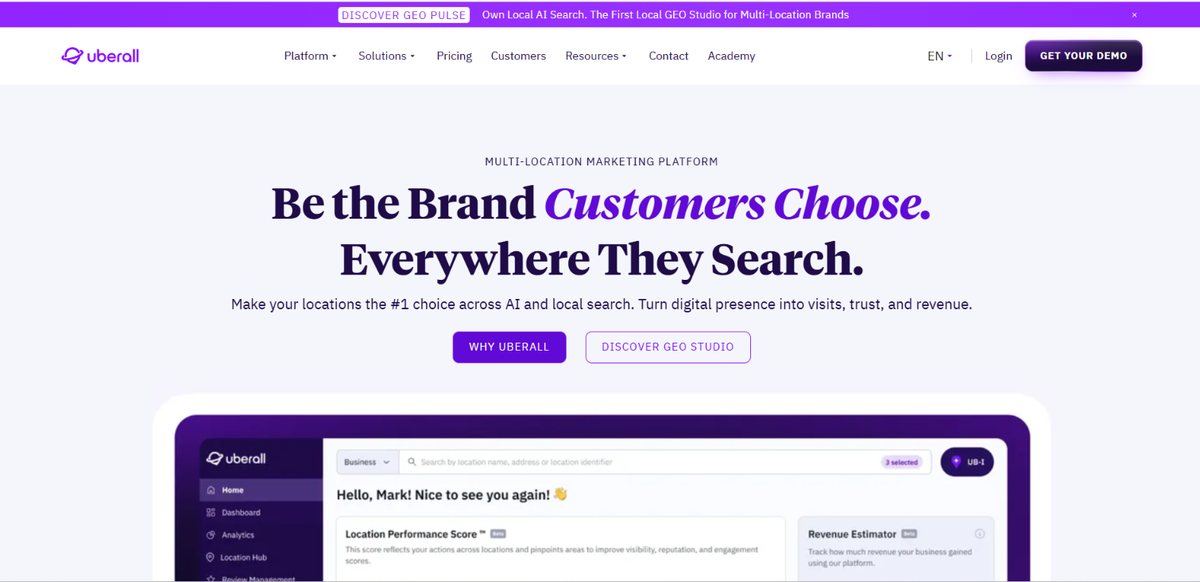
Uberall is a multi-location marketing platform combining listings, reputation management, local pages, social media, and location performance reporting.
Its review management tools use AI to help businesses draft and coordinate responses across many locations.
For example, a restaurant group with 200 branches may want to standardize response quality while allowing local managers to handle feedback from their own restaurants.
Uberall can be evaluated for balancing centralized brand instructions with location-level responsibilities.
Key Capabilities
AI Review Assistant
Uberall generates context-aware review response suggestions based on available customer feedback and brand instructions.
Employees can review and modify these suggestions before publishing.
AI-assisted bulk responses
The platform supports responding to multiple reviews through bulk workflows.
This can be useful when organizations receive large volumes of routine feedback.
Brand guidelines
Uberall's AI response functionality supports configured brand tone and communication guidance.
Approvals and permissions
The platform provides workflows for assigning responsibilities and reviewing responses before publication.
Sentiment analysis
Marketing and customer experience teams can analyze review themes and identify feedback requiring attention.
Location-level oversight
Uberall provides centralized reporting for customer reviews and response activity across locations.
Its AI review response documentation describes response generation, bulk workflows, approvals, and location management.
Strengths
Uberall is relevant when AI review management needs to operate within a wider location marketing environment.
Retail and restaurant organizations can evaluate review workflows alongside listings management and local engagement.
Its approval and collaboration features may also be useful when corporate teams and local managers share responsibility for responding to customers.
Limitations
Buyers should verify direct reply publishing for their most important review sources.
A review appearing in a central dashboard does not guarantee that the response can be published through the same system.
Businesses should also test approval permissions and confirm whether any unattended response automation is available in their proposed configuration.
Pricing
Uberall provides customized pricing based on locations, selected products, and enterprise requirements.
Request a proposal covering review management, AI features, required integrations, user permissions, and support.
Verdict: Uberall is particularly relevant to businesses seeking AI-assisted bulk review management alongside enterprise listings and local marketing capabilities.
5. SOCi: Best for Distributed Franchise Marketing Teams

Best suited for: Franchise networks and enterprise marketing departments coordinating customer responses across independently operated locations.
SOCi provides multi-location marketing software with capabilities covering search, reputation management, social media, and AI-assisted workflows.
Its established Genius Reviews product introduced AI-generated responses for distributed brands.
SOCi's current product information also describes the broader Genius Reputation Agent, which combines review response capabilities with additional customer feedback functions.
For a franchise restaurant network, this can support centralized brand communication while allowing approved local employees to participate in review management.
Key Capabilities
AI-generated responses
SOCi supports responses that reflect configured brand voice and location context.
Automated response workflows
SOCi documents automatic review response capabilities, including workflows using approved response templates and AI assistance.
Review approvals
Corporate marketing teams can establish review response procedures that require appropriate authorization.
Multi-location monitoring
Organizations can coordinate review activity across locations through centralized reporting.
Customer feedback analysis
SOCi's broader reputation products include customer sentiment and feedback insights.
Additional local marketing features
The wider SOCi platform covers listings, local search, social publishing, and other distributed marketing activities.
The Genius Reputation Agent product page describes current reputation automation capabilities.
SOCi's Genius Auto Respond documentation also provides information about rule-based responses using pre-approved templates.
Strengths
SOCi is particularly relevant to large franchise businesses where headquarters and local operators share marketing responsibilities.
Its review response capabilities can be evaluated alongside the organization's broader reputation, search, and social marketing processes.
Corporate teams may benefit from defining consistent brand standards while delegating appropriate tasks to regional or local employees.
Limitations
SOCi's broader platform may be more than a business needs if the only requirement is generating occasional review replies.
Buyers should confirm the distinction between AI-generated responses, template-based automatic responses, and any agent-driven publishing functionality in their proposed package.
Review-source coverage, approval rules, integrations, and usage limits should also be verified.
Pricing
SOCi offers customized enterprise pricing based on location count and the Genius Agents and skills deployed.
However, selected skills can have usage limits.
Verdict: SOCi is worth evaluating when a franchise or enterprise organization needs review automation within a broader distributed marketing platform.
6. Reputation: Best for Customer Experience and Review Intelligence
Best suited for: Healthcare networks, automotive organizations, hospitality brands, and service enterprises using customer feedback to guide operational decisions.
Reputation provides review management and customer experience software for organizations managing customer feedback across numerous locations.
Its platform includes review monitoring, AI-assisted responses, business listings, and reputation analytics.
For example, an automotive dealership group may want to monitor reviews across sales and service departments while investigating recurring complaints about appointment scheduling or customer communication.
Reputation is relevant when the organization needs both response workflows and information that helps identify patterns in customer experiences.
Key Capabilities
AI-assisted responses
Reputation includes AI responding within its review management product.
Review monitoring
Organizations can collect and manage customer feedback across supported sources.
Review requests
The platform supports customer feedback collection through available review management tools.
Reputation analytics
Higher product tiers include additional analysis of reputation trends and customer sentiment.
Location-level reporting
Enterprise teams can compare review activity and related performance indicators across locations.
Additional customer experience tools
Reputation offers surveys, reputation insights, and other capabilities depending on the purchased package.
Strengths
Reputation is particularly relevant when customer feedback needs to inform decisions beyond individual marketing responses.
For example, recurring complaints across several locations may indicate operational problems that require management attention.
Its combination of reputation management and customer experience analysis can support collaboration between marketing, operations, and customer service teams.
Limitations
Organizations looking only for lightweight AI review drafting may not need the wider platform.
Although Reputation publicly documents AI responding, buyers should verify the exact approval, publishing, and automation options available to their accounts.
Some advanced functionality is sold through higher plans or add-ons.
Pricing
Reputation publishes the following starting prices:
- Rep Core: Monthly price: $80 per location.
- Rep Core + Pulse: Monthly price: $115 per location.
- Rep Core + Surveys: Monthly price: $150 per location.
- Enterprise: Monthly price: Custom.
Rep Core includes review management, AI responding, and business listings.
Rep Core + Pulse adds more advanced reputation insights and analytics.
The broader Surveys package provides additional customer feedback functionality.
Verdict: Reputation is particularly suitable for organizations seeking AI-assisted review management alongside customer feedback analysis and enterprise reputation reporting.
AI-Generated Replies vs. Automatic Publishing: Which Approach Should You Use?
AI-generated drafts with human approval are generally the more cautious starting point for multi-location organizations.
Automatic publishing may be suitable for narrowly defined review categories when the platform supports appropriate controls.
However, organizations should not use the same response process for every review.
A positive review mentioning friendly service creates different risks from a complaint involving personal information or a disputed financial transaction.
Recommended Review Response Approval Framework
- Simple positive feedback: Suggested workflow: AI draft or narrowly controlled automation. Main consideration: Usually requires limited investigation.
- Positive review with a detailed comment: Suggested workflow: AI draft with optional local review. Main consideration: Personalization and factual accuracy.
- Mixed feedback: Suggested workflow: Human-approved AI draft. Main consideration: Acknowledging both praise and concerns.
- One- or two-star complaint: Suggested workflow: Human review and escalation where needed. Main consideration: Potential unresolved issues.
- Medical, legal, safety, or discrimination concern: Suggested workflow: Specialist review. Main consideration: Privacy, accuracy, and organizational risk.
- Suspected fake or policy-violating review: Suggested workflow: Policy assessment before responding. Main consideration: Appropriate reporting procedure.
These are suggested internal controls, not rules mandated by Google.
Example: Responding to a Routine Positive Review
A customer writes:
"Staff were friendly and my order was ready when promised."
An appropriate reply might be:
"Thanks for sharing your experience. We're glad our team was helpful and that your order was ready on time. We appreciate your feedback."
This response acknowledges the customer's actual experience without adding unsupported details.
Example: Responding to a Sensitive Complaint
A customer writes:
"I was charged twice, and nobody has fixed the problem."
The business should not automatically reply that a refund has been processed unless this has been verified.
A more appropriate initial response could acknowledge the concern and direct the customer to an authorized support channel.
AI may help draft the wording, but the business remains responsible for checking the facts and deciding what can be said publicly.
Google recommends keeping responses professional, concise, relevant, and respectful of customer privacy.
See Google's review response best practices.
How to Choose the Right AI Review Reply Tool
A reliable software selection process should evaluate actual review handling requirements rather than simply counting AI features.
1. Test Response Quality Using Representative Reviews
Provide each shortlisted platform with the same approved sample reviews.
Include positive comments, vague reviews, mixed experiences, detailed complaints, and sensitive scenarios.
Evaluate whether the software:
- Understands the customer's actual concern
- Uses an appropriate tone
- Avoids inventing facts or resolutions
- Follows brand instructions
- Produces concise, natural responses
- Handles different languages appropriately
- Recognizes when a review requires escalation
Do not judge performance using only straightforward five-star reviews.
Complex feedback is often where factual accuracy and approval controls matter most.
2. Verify Review Platform Coverage
Google Business Profile is important, but organizations may also receive feedback through Facebook, Yelp, Tripadvisor, and industry-specific websites.
Ask each vendor to distinguish between review monitoring, AI drafting, and direct reply publishing.
For example, a platform may display a review from a particular website but require employees to visit that website to publish a reply.
Evaluate source coverage against the actual review platforms used by your locations.
3. Test Approval Permissions and Escalation Rules
For a franchise network, corporate marketing may need visibility into all reviews while local managers handle routine responses.
The software should support the organization's actual management structure.
During demonstrations, test whether a negative review can be assigned to a regional manager, whether sensitive feedback can be escalated, and whether unauthorized users are prevented from publishing.
Also evaluate whether the platform records who drafted, approved, edited, and submitted a response.
4. Compare Total Costs
Subscription pricing alone may not explain the cost of AI review management.
Important considerations include location fees, user seats, review volumes, AI credits, supported sources, integrations, onboarding, and additional product modules.
For example, a platform may provide sufficient AI capacity for a small regional business but require additional credits for an enterprise receiving thousands of reviews.
Request a written explanation of usage allowances and what happens when they are exhausted.
5. Evaluate Reporting Quality
Useful reporting should distinguish between reviews received, responses drafted, responses submitted, and responses successfully published.
These are not always the same events.
A marketing team should also be able to identify overdue responses, unresolved escalations, and recurring feedback themes.
The most useful report is one that helps employees take action, not merely display another performance score.
How Multi-Location Brands Can Implement AI Review Responses
A controlled rollout is preferable to activating automatic replies across every location immediately.
Step 1: Audit Current Review Activity
Start by documenting existing review volumes, unanswered feedback, response times, and recurring complaints.
Identify locations with large review backlogs or unusually sensitive customer feedback.
This provides a baseline for evaluating whether the new software improves operations.
Step 2: Establish Response Guidelines
Define the organization's approved communication style.
Guidelines should cover response length, tone, language, privacy, escalation, and authorized customer support contact information.
Include restrictions against revealing private customer information, making unverified claims, or offering remedies without approval.
Step 3: Configure AI Workflows
Start with AI drafting and human review.
Once the team understands response quality, evaluate whether limited automatic publishing is appropriate for simple feedback categories.
Maintain approval requirements for sensitive or complex reviews.
Step 4: Pilot Across Representative Locations
Choose a small group of locations with different review volumes, operational conditions, and management structures.
Include routine positive reviews and complicated negative feedback.
Record whether employees accept, edit, reject, or escalate generated responses.
Step 5: Measure Operational Performance
Use measurable indicators rather than relying on subjective impressions of the AI tool.
- Review response rate: What it measures: Share of eligible reviews answered.
- Median response time: What it measures: Time required to handle reviews.
- AI draft acceptance rate: What it measures: Share of drafts published without edits.
- Escalation rate: What it measures: Reviews requiring additional investigation.
- Publishing failure rate: What it measures: Submitted replies that fail to appear.
- Response quality errors: What it measures: Incorrect, inappropriate, or unsupported statements.
- Manual handling time: What it measures: Employee effort needed to review or resolve feedback.
A higher response rate does not automatically indicate improved customer satisfaction.
The organization should also examine review themes, recurring complaints, and whether customers receive appropriate follow-up.
Step 6: Review Published Responses Regularly
Audit a sample of published replies.
Look for repeated wording, unsupported promises, incorrect location information, privacy concerns, and missed escalations.
Investigate any publishing failures or unexpected changes in automation behavior.
Review response guidelines whenever business policies, products, or organizational responsibilities change.
Common Mistakes When Automating Review Responses
The most significant mistake is treating every review as equally suitable for automation.
A routine compliment and a complaint about an injury or disputed payment should not necessarily follow the same workflow.
Publishing Generic Replies Repeatedly
Large volumes of nearly identical responses can make customer communication feel impersonal.
Google recommends replies that are relevant and useful rather than repeatedly thanking every reviewer with the same wording.
AI should help staff communicate more effectively, not produce unnecessary responses.
Allowing AI to Invent Resolutions
An AI system may generate a plausible response that claims a refund was issued, an investigation occurred, or a problem was corrected.
Those statements should not be published unless the business has verified them.
Automated systems must not be treated as a source of truth about individual transactions.
Ignoring Publishing Failures
Some review platforms require additional processing before replies appear.
Google reviews owner responses before displaying them publicly.
An internal dashboard showing a response as submitted is not always evidence that the reviewer can see it.
Failing to Escalate Sensitive Feedback
Complaints involving safety, health, discrimination, private information, or financial disputes may require specialist involvement.
Organizations should define appropriate procedures rather than allowing AI to handle these situations without oversight.
Confusing Review Responses With Review Generation
AI-generated business replies and customer reviews are different types of content.
Businesses may use software to assist with legitimate owner responses, but they must not create fake customer reviews or manipulate review ratings.
Google prohibits incentivized and misleading review activity.
The response workflow should preserve authentic customer feedback rather than attempt to control which opinions are publicly visible.
Frequently Asked Questions About AI Review Response Software
What Is the Best AI Review Response Software for Multi-Location Brands?
Synup, Birdeye, Yext, Uberall, SOCi, and Reputation are six relevant platforms to evaluate.
Synup combines review management with wider local marketing tools. Birdeye offers configurable AI response agents, while Yext supports structured generative response workflows.
Uberall is relevant for location-specific review management, SOCi for enterprise franchise operations, and Reputation for customer experience analytics.
The best choice depends on automation requirements, supported review sources, location count, and budget.
Can AI Automatically Respond to Google Reviews?
Yes. Some review management platforms offer automatic response publishing through configured rules.
Other tools generate AI drafts that employees must approve or send manually.
Google still controls whether submitted business replies comply with its policies and appear publicly.
Is It Safe to Use AI for Negative Reviews?
AI can help draft responses to negative reviews, but complex or sensitive feedback should receive human attention.
The software may not know the complete customer history, the status of an investigation, or what remedy has been authorized.
Employees should verify facts, protect personal information, and avoid unsupported promises.
How Much Does AI Review Response Software Cost?
Pricing varies by vendor and deployment.
Synup publishes monthly plans starting at $49 for one location, while Reputation lists Rep Core starting at $80 per location per month.
Birdeye, Yext, Uberall, and SOCi commonly require customized quotations for enterprise requirements.
Compare included AI functionality, approval controls, integrations, and usage allowances before selecting a platform.
Can AI Review Reply Tools Respond in Different Languages?
Some platforms support multilingual or translation-assisted replies.
Yext documents translation and language-related options in its generative response tools. Uberall also describes multilingual AI-assisted review management.
International businesses should verify supported languages, review-source compatibility, and response quality before enabling automated publishing.
Does Responding to Google Reviews Improve Local SEO?
Responding to customer reviews helps demonstrate engagement and provides useful information to potential customers.
However, Google does not guarantee higher rankings because a business uses AI responses or increases its response frequency.
Google identifies relevance, distance, and prominence as major local ranking factors.
Businesses should prioritize genuine reviews, accurate profiles, helpful communication, and meaningful customer experiences.
Should Franchise Businesses Use Fully Automated Review Responses?
Automatic publishing should be introduced selectively.
Simple positive feedback may be suitable for carefully controlled automation, while complaints and sensitive reviews should follow an approval process.
Franchise businesses should establish corporate policies, appropriate local permissions, and regular quality monitoring.
Final Verdict: Which AI Review Response Software Should You Choose?
The most suitable AI review response software for a multi-location brand should make customer communication easier without compromising accuracy, privacy, or accountability.
Synup is worth evaluating for integrated review management and local marketing workflows. Birdeye offers configurable AI response agents for organizations managing substantial customer feedback.
Yext is relevant when detailed response rules and enterprise approvals are central requirements. Uberall supports AI-assisted review management across location networks, while SOCi offers automation designed for distributed franchise marketing.
Reputation is particularly suitable when review responses need to connect with broader customer experience insights and reporting.
Before choosing, shortlist two or three platforms and test them with the same representative review scenarios.
Confirm direct publishing capabilities, approval requirements, integrations, source coverage, and total costs.
The right platform is not necessarily the one that automatically replies to the greatest number of reviews. It is the one that helps your organization respond accurately, maintain appropriate human oversight, and address customer feedback consistently across locations.